
How to get more fun out of paragliding, and become safer at the same time: a few thoughts after a season of SIV courses and XC tours.
Paragliding often calls for quick decisions and quick reactions to outside conditions. Often you need a Plan B straight away, sometimes even a Plan C or D, and that takes skill. On top of that, wings are being built to be more and more stable, which gives a growing sense of safety until the moment comes when you have to act fast. That makes it all the more important to train: to anticipate situations, to make movements automatic and to always have an emergency plan ready. The bottom line is simple: more training, more safety, more fun in the air!
Where are the biggest dangers in paragliding?
There is no doubt that piloting errors and bad decisions about flying and weather conditions are the main causes of accidents. Poor wing control leaves little room for correction, especially when flying close to the ground, during take-off and landing, and when the wing rotates or pitches at low altitude. Mistakes in these situations usually have serious consequences.
The mental side matters just as much. A lack of flying practice or a wing that is too demanding can lead to fear in stressful situations, and fear often leaves you unable to act. On the other hand, years of routine can lead to careless mistakes, for example during pre-flight checks, or to pushing weather limits further and further because you trust your own abilities. Sadly, there are many ways to make mistakes.
What can I do as a pilot?
TRAIN! Everyone knows that sport takes training, both physical and mental, and for some sports this is obvious to everyone. Someone who only goes for leisurely walks will never run a marathon. And it’s clear that a climber needs a lot of strength in their arms and fingers to climb a big wall. But paragliding? That’s often less obvious, to outsiders and to pilots alike. Here are some of the most important points:
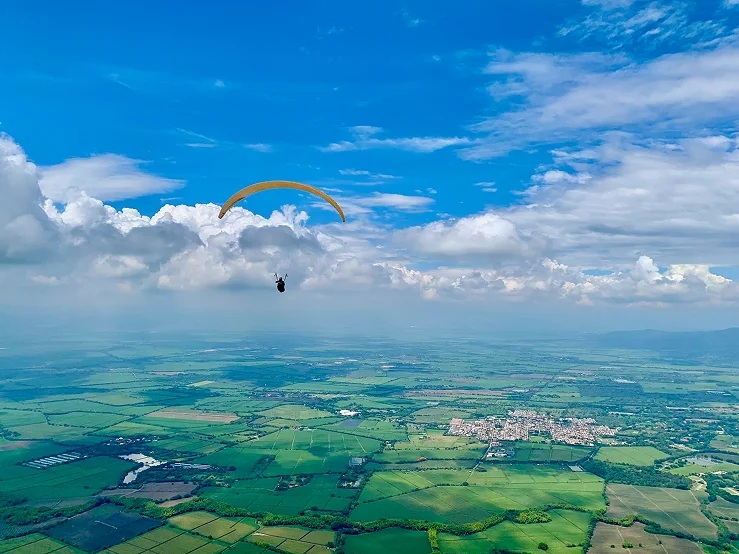
FLYING TAKES TIME.
It’s a fact: the more time you devote to paragliding as a sport, the more confident you become with your wing. Regular ground handling and plenty of airtime build routine in all kinds of conditions and increase the “comfort factor”. Lots of take-offs and landings at different sites help too, and days with weak thermals can be used for hike & fly or manoeuvre practice. The motto should be: every flight counts.
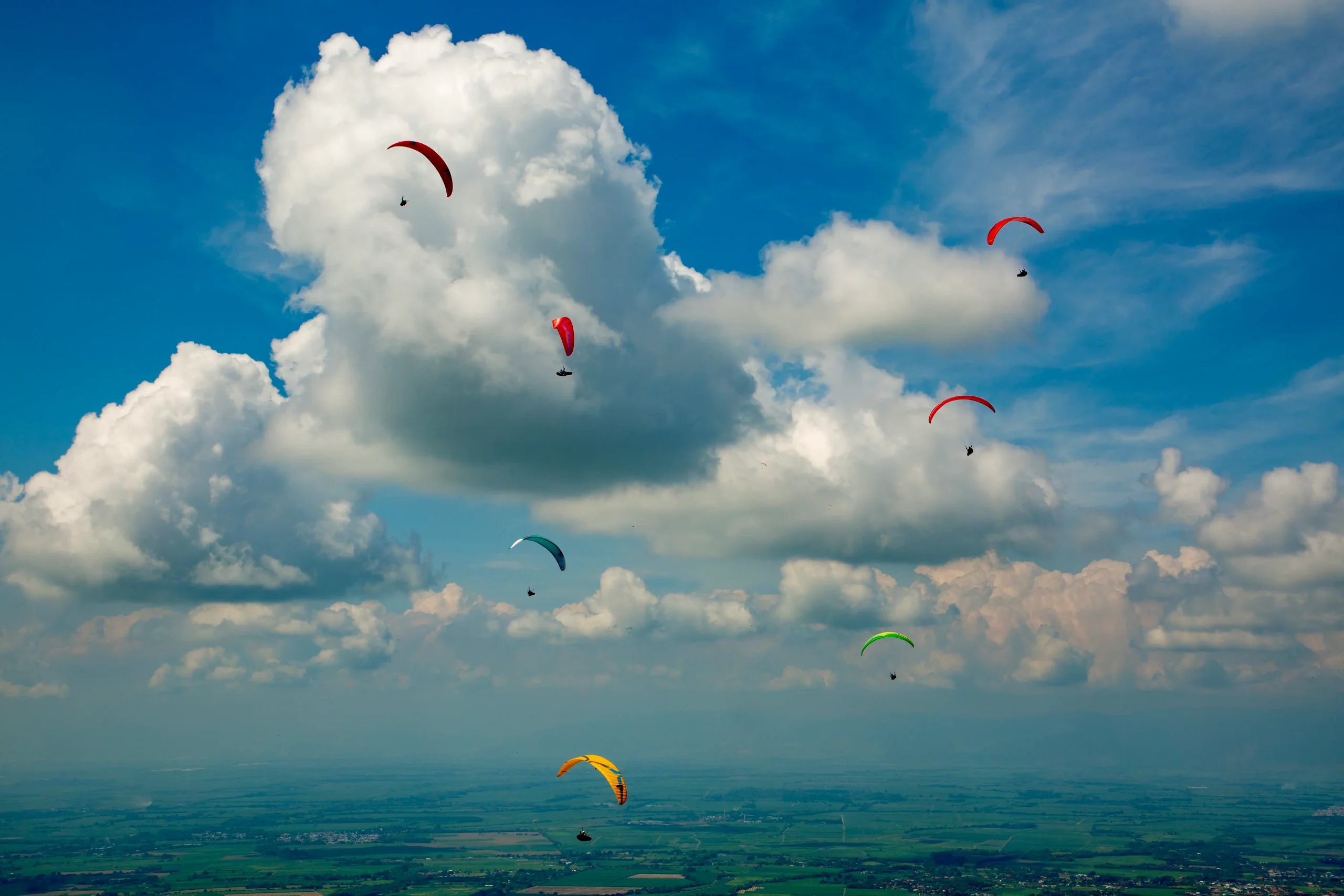
If you only have limited time to fly, you need to plan carefully and pick the right flying areas for each season to increase your chances of plenty of airtime. Adding a destination with fairly reliable flying conditions to your calendar obviously helps you log hours. In Colombia this spring, for example, pilots logged up to 30 hours of airtime on a two-week tour, which also lets you start the spring season at home feeling relaxed.
FLYING TAKES THEORETICAL KNOWLEDGE.
Besides flying practice itself, paragliding also takes a lot of study, preparation, planning and dry training. Understanding how weather and terrain affect flying is essential, especially when planning cross-country flights. Besides the wide range of books available, analysing tracklogs and skyways maps can also be useful tools.
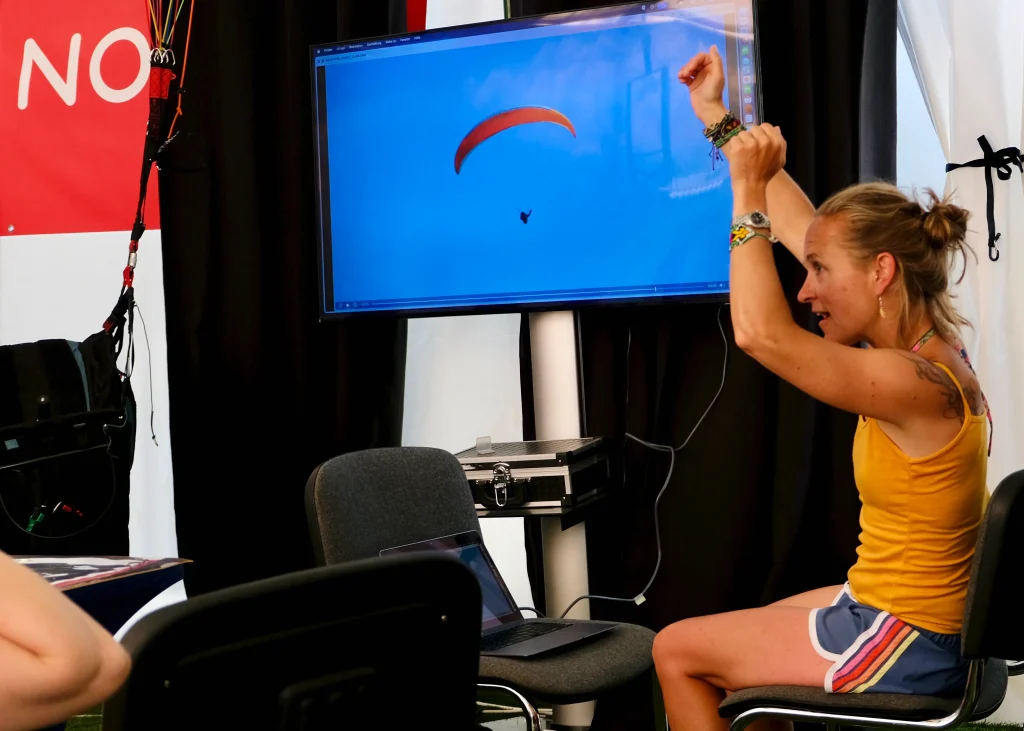
When training manoeuvres, for example on an SIV course, you should also prepare mentally using books, a training script and instructional videos. But as with all speed sports, dry training on the ground is the most important part, since a manoeuvre run only lasts a few minutes. In a simulator, on a chair or while walking on the ground, you can go through movements, repeat them and make them second nature, strengthening your muscle memory.
FLYING TAKES SKILLS.
Training in flying technique begins with learning to become a paraglider pilot, and all too often it also ends when you get your licence. After that, people keep flying but often invest little time in further training. What gets forgotten is that, as in any sport, skills you already have must be practised regularly so you can call on them when needed. Even a relaxed sled ride requires a safe take-off and a safe landing. A small training slope where you can practise different take-off and landing scenarios is ideal for this. There is also a wide range of dedicated take-off, landing and top-landing courses today that you can use to improve. And of course: as much ground handling as possible!
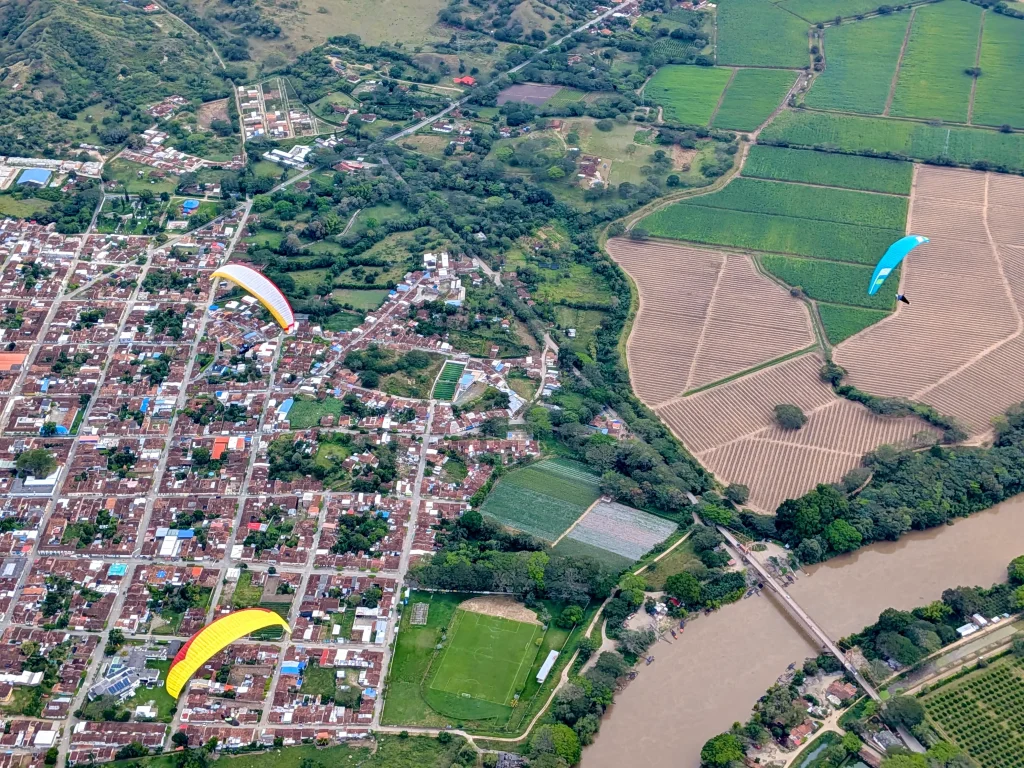
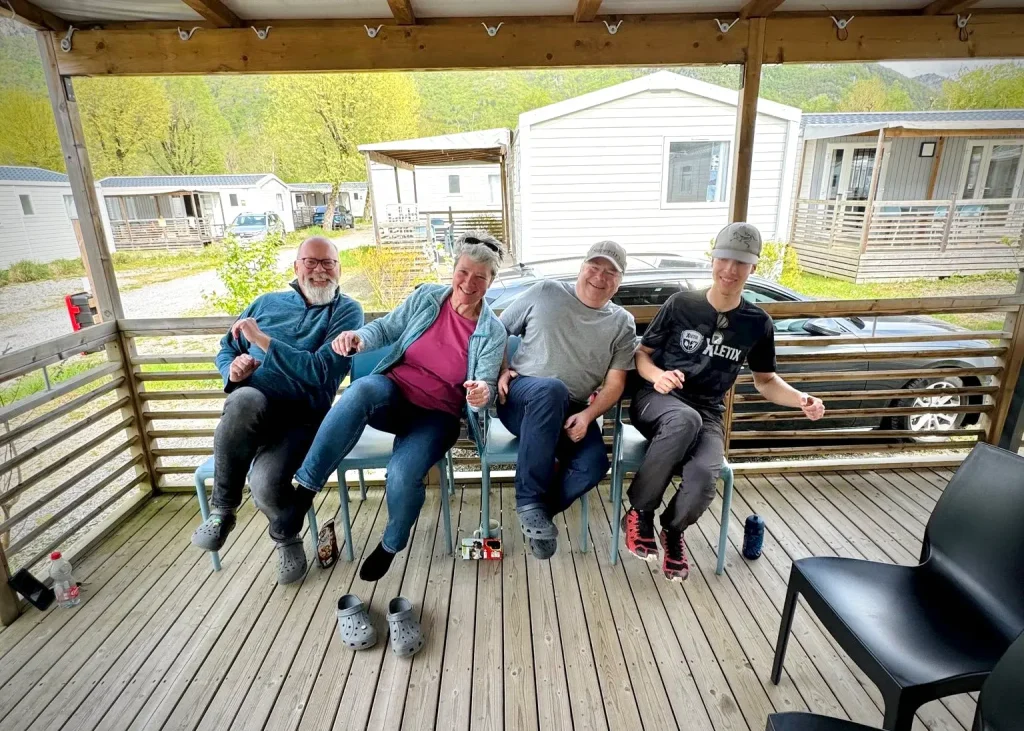
Another big advantage in paragliding is learning in a group and flying together. You can benefit especially from pilots with more experience than you. What decisions do they make, and what tactics do they fly? When do they leave a climb, and which thermal or cloud do they head for next? In the flatlands in particular, flying in a group is a big advantage when searching for the next thermal, and of course it’s much more fun to share experiences. There are plenty of options: thermal camps, flying safaris and XC tours led by instructors or experienced guides for all skill levels. You increase your own safety, have no logistics to worry about on holiday, and get to learn and swap ideas.
An SIV course over water should definitely be part of your regular plan, building up your flying skills step by step. Simulating collapses and extreme flight situations, or simply having fun practising wingovers and other acro manoeuvres, helps you get to know your equipment and yourself better. Knowing how to react in dynamic flight situations is essential, and it’s the only way to avoid being overwhelmed and losing control when they happen. If you know, for example, how to stop a wing that is rolling hard or surging forward, or what autorotation feels like with a cravat and that it can be brought under control within half a turn using the outer brake, you’re a big step ahead.
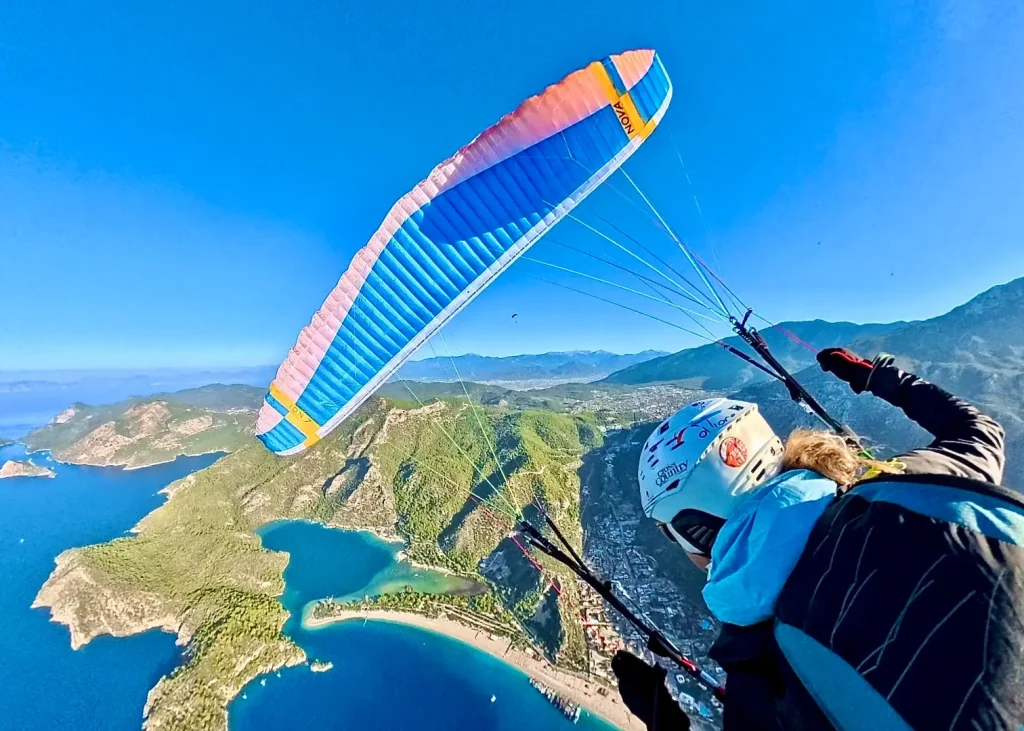
When training, you should also always keep an emergency plan in the back of your mind and simplify it into an image so you can recall it quickly. For example, when learning to control a spiral dive, imagine a steering wheel: steering the spiral inwards makes it faster, steering outwards makes it slower. If you then end up in a locked-in spiral with high G-forces, it’s easier to react by turning the imaginary wheel “fully outwards” (pull the outer brake, release the inner brake) to stop the rotation decisively.
If a flight situation can’t be brought under control, the last emergency plan is of course always to throw your reserve parachute immediately. A problem at low altitude calls for this without hesitation! This also needs training so that the option stays present in your mind. A reserve deployment clinic in a gym or a G-force trainer that simulates throwing the reserve under centrifugal force is very helpful for this.

FLYING TAKES A CLEAR HEAD.
Last but not least, we shouldn’t forget the “human factors” that get so much attention these days: our mental abilities, limits and behaviour in how we approach our sport. Simply put, paragliding needs a clear head and full concentration, good self-assessment and a healthy attitude towards mistakes, because mistakes can be more serious than in many other sports.
If you’re unwell, under a lot of stress, or have problems weighing on your mind, it’s best not to fly at all. These are exactly the conditions in which careless mistakes tend to creep in.
But even when you’re fit and highly motivated, you should stay mindful. Sometimes the joy of flying fades into the background while chasing XC points or cool social media posts takes over, and that is exactly what can quietly push your personal risk-taking in a dangerous direction. This often leads to overconfidence, and perhaps also to choosing a wing that is too demanding and leaves less safety margin. As with so many things, the answer is probably to keep a healthy balance, to question your ambitions consciously again and again, and never to forget what fascinates us about paragliding in the first place.


Conclusion
TRAINING is essential in paragliding too, and it matters on several levels. Basic techniques need regular repetition to stay sharp and to build experience. Training manoeuvres and extreme flight situations helps prevent dangerous situations, because what you know scares you less! Muscle memory also helps you recall movements quickly. The goal is to act automatically, following a decision tree.
Flying in a group, or at least in pairs, gives you the chance to talk through tactical decisions and shared experiences. This exchange can enrich you, help you progress, and help you spot your own bad decisions in a constructive, analytical way. A good mindset here means consciously analysing and reflecting rather than just comparing distances, and that attitude needs training too.
So if you keep your motivation to train high, you won’t just improve your safety and your skills, you’ll also multiply the fun you have flying. And that, after all, is what we’re all looking for… above the peaks and below the clouds.